Welsh Government has committed a further £17m from existing budgets to warmer homes, £8m of it for social homes. So what are we to make of that, and where do we go from here?
Where Optimised Retrofit started

On 16 July Siân Gwenllian announced £17m for warmer homes, delivering a commitment in Plaid Cymru’s ‘First 100 Days Plan’. Of that, £8m goes to the Optimised Retrofit programme (ORP), taking this year’s budget from £98.75m to £106.75m. A further £5m goes to the Nest scheme for low-income owner-occupiers and private tenants (now £37m) and £4m to “alternative and novel delivery models”, described as area-based work for rural, off-grid homes. What those novel models are and who the “innovative local partners” will be, nobody has yet said (at Nest’s average package cost, £4m is around 200 homes). Less than half of the “additional” money is for social homes.
Two days before the announcement, the Senedd voted down the new government’s First Supplementary Budget by 49 votes to 44, and with it a further £20m for social housing. Plaid holds 43 of the 96 seats, so every budget needs votes from elsewhere. Hence the £17m was found, as the written statement puts it, from “existing budget within my portfolio”. It is also the second in-year top-up to ORP in eight months, following £14.1m from the previous Labour government last November, again from existing budgets.
In scale, £8m on £98.75m is an 8% uplift, for one year. Set against the costs, though, it is small change. The New Economics Foundation put the bill for Welsh social homes at around £24,000 each in 2021 and one landlord told Welsh Government’s evaluators that a full retrofit would cost £25,000 to £30,000 per home across its 13,000 properties, needing an extra £15m a year on top of existing budgets. At £435 per home per year, £25,000 takes nearly 60 years.
Built off the back of the Innovative Housing Programme, Welsh Government’s Optimised Retrofit Programme (ORP) was launched in 2020 with £9.5m, quickly boosted to £19.5m.1 I was fortunate enough to help in the two years or so of development that built up to that first year, then at BRE and latterly at Sero (the business I co-founded), and its launch placed Wales firmly ahead in the well-mannered competition between the home nations.
The first year asked for a competitive submission from, or on behalf of, Social Landlords, and for a holistic assessment of every home to be retrofitted, in the spirit of what was then the new PAS 2035 (the whole-dwelling retrofit standard) without its administrative process. That “whole home” approach wasn’t the scheme’s only, or most positive, innovation. ORP asked two material leaps of every funded home.
The first was a pragmatic level of metering and monitoring. Homes were expected to meter heating, hot water and unregulated use (broadly, whatever Residents plug in) separately, at 15 minute intervals, and to report the weather outside and the temperature, relative humidity and carbon dioxide inside, ideally from 3 rooms, though ultimately 1 was accepted. The data went daily to a central processor on behalf of Welsh Government. The aim was the largest ‘time-series’ dataset on home performance in Europe, joined to detailed ‘static’ data on the homes, the measures and their costs. In 2020 nothing approached that scale or detail.
The second, and bigger, leap was that homes then fitted with relevant measures had to be capable of intelligently linking to the electricity grid, so that they could “demand shift” using thermal and electrical storage where installed. Demand shift is fundamental to scaling up renewable energy and to supporting the grid as heat and transport electrify, and it’s a proven route to lower bills where Residents can move their time-of-use, directly or via storage. Baking that into ORP was arguably beyond innovative and into controversial – hydrogen in homes was still being debated, and the tired “fabric first” mantra still devalued electrification, and when the electricity is drawn from (or fed to) the grid. What is now plainly UK Government policy, through the ‘Warm Homes Plan’ and the ‘Clean Power 2030 Action Plan’,2 was a brave move by Welsh Government in 2020.
ORP is now in its 6th and, in its current form, final year, which ends on 31 March 2027.3 Over that period Welsh social housing has received around £480m,3 about £2k per home across Wales’s 245,000 or so social homes.4 This year’s £106.75m is around £435 per home, against roughly £100 per social home per year under England’s ‘Warm Homes: Social Housing Fund’, so Wales still funds at a higher rate than England (even as the funding there has ramped up significantly).5
The half dozen years have also seen the ambition wound back. Metering and monitoring is now almost entirely optional, the competition has become a pro-rata allocation by formula on 2020 stock numbers,6 the grid-linked element is gone, and the ‘static’ data (always the worst reported part) doesn’t have the granularity that would be most useful. The largest dataset in Europe was achieved in part, I believe, and whilst not thoroughly enough it still has its uses: this year’s Welsh Government evaluation report for ORP 3 uses real measured energy data to assess bill savings and improvement measures.7
That’s a shift in principle from “what the model thinks happened” to “what the metering says really happened”.
ORP drove other lasting progress too. The Welsh Housing Quality Standard 2023 (WHQS 2023) requirement for a Target Energy Pathway (TEP) for every home comes straight from the competition submission of around 28 collaborating Social Landlords, who proposed to build “Pathways to Zero” for every home. So if nothing else, ORP set the principle that “having a holistic plan” beats having piecemeal reactions, or no plan at all.
So what was announced?
On 16 July the Cabinet Minister for Local Government, Housing and Planning, Siân Gwenllian, announced £17m for warmer homes, delivering a commitment in Plaid Cymru’s ‘First 100 Days Plan’.8 Of that, £8m goes to ORP, taking this year’s budget from £98.75m to £106.75m. A further £5m goes to the Nest scheme for low-income owner-occupiers and private tenants (now £37m), and £4m to “alternative and novel delivery models”, described as area-based work for rural, off-grid homes.9 What those novel models are, and who the “innovative local partners” will be, nobody has yet said (at Nest’s average package cost, £4m is around 200 homes). If you know, I’d love to hear. Either way, less than half of the “additional” money is for social homes.
Two days before the announcement, the Senedd had voted down the new government’s First Supplementary Budget by 49 votes to 44, and with it a further £20m for social housing.10 Plaid holds 43 of the 96 seats, so every budget needs votes from elsewhere. Hence the £17m was found, as the written statement puts it, from “existing budget within my portfolio”. It’s also the second in-year top-up to ORP in 8 months, following £14.1m from the previous Labour government last November, again from existing budgets.11
In scale, £8m on £98.75m is an 8% uplift, for 1 year. Set against the costs, though, it’s small change. The New Economics Foundation put the bill for Welsh social homes at around £24k each in 2021,12 and one landlord told Welsh Government’s evaluators that a full retrofit would cost £25k to £30k per home across its 13,000 properties, needing an extra £15m a year on top of existing budgets.7 At £435 per home per year, £25k takes nearly 60 years.

The £8m is also not the largest change to the money this year. The Energy Company Obligation (ECO), which Welsh Government estimates has been worth more than £100m a year of work in Wales across all tenures, closes on 31 December 2026. In its place Wales receives £86m of consequential funding, spread over four years (so around £79m less per year). Then on a single day, 31 March 2027, ORP ends in its current form, all funded works must be complete and a Target Energy Pathway (TEP) is due for every social home. No successor has yet been named, let alone costed. The evaluation’s first recommendation was a multi-year funding cycle, because annual rounds create “compressed planning, stop-start delivery and procurement inefficiencies”. Nobody trains apprentices or scales up capacity for a programme with no confirmed second year.
A minority government working to a budget written by its predecessor had few other levers in its first 100 days, and the evaluation found ORP to be good value, with a benefit-to-cost ratio of at least 1.9. The Housing Minister has called the £17m “just the beginning”. The First Minister, though, has warned that next year’s budget “will be even lower in real terms than this year”.
The £8m is also not the largest change to the money this year. The Energy Company Obligation (ECO), which Welsh Government estimates has been worth over £100m a year of work in Wales across all tenures, closes on 31 December 2026. In its place Wales receives £86m of consequential funding, spread over 4 years (so around £79m less per year).3 Then on a single day, 31 March 2027, ORP ends in its current form, all funded works must be complete, and a TEP is due for every social home.6 No successor has yet been named, let alone costed. The evaluation’s first recommendation was a multi-year funding cycle, because annual rounds create “compressed planning, stop-start delivery, and procurement inefficiencies”.7 Nobody trains apprentices or scales up capacity for a programme with no confirmed second year, after all.
To be fair, a minority government working to a budget written by its predecessor had few other levers in its first 100 days, and the evaluation found ORP to be good value, with a benefit to cost ratio of at least 1.9.7 The Minister has called the £17m “just the beginning”.13 The First Minister, though, has warned that next year’s budget “will be even lower in real terms than this year”.14
Six years on
Six years on, we’re now in a new world.
Globally and nationally, the impacts of climate change are more visible on our homes. The fragility of our fossil-fuel energy system, and its impact on Residents’ bills, has been demonstrated, and the decarbonisation of our national energy system is now much more widely acknowledged as the electrification of our energy system. Hydrogen (in homes and cars) is dead. Even the debate around “fabric first” has moved on, with clear UK Government positions on retrofit at scale more often seeking modest fabric improvements and electrification (whilst fabric first remains the right starting point for new build homes).
Whilst our new minority government doesn’t (at time of writing) have a published ‘Programme for Government’, retrofit was not absent from Plaid Cymru’s offer. The manifesto calls housing renewal “a national mission” and promises to expand retrofit through “a tenure-neutral, area-based approach” across owner-occupied, rented and social homes, with “practical and achievable energy-efficiency standards” that upgrade more homes “using the same resources”, and an independent assessment of the works before payment, though no sum of money is attached.15 For Social Landlords, “tenure-neutral” and “the same resources” in the same paragraph deserve a careful read, as ORP was theirs alone and its successor may well not be. There’s a case for that: social housing is already the best performing tenure, with 73% of homes at Energy Performance Certificate (EPC) “A” to “C”, against 37% of privately rented and 32% of owner-occupied homes,3 so most of the 340,000 Welsh households in fuel poverty probably live outside it.16 The manifesto also promises a single national energy company, expanding Trydan Gwyrdd Cymru by folding in Ynni Cymru and the Welsh Government Energy Service, with “a clear remit to help reduce energy bills”.15 I’ll come back to that…
The Minister has also told Inside Housing that she will review WHQS 2023 and consider how to make its requirements “more achievable” for Social Landlords,17 and the government’s own 100 days report promises “a holistic review of cost-effectiveness, including the energy efficiency levels required across tenures”.3 I read that second phrase as the WHQS targets being put on the table.
We also have new rules from across Offa’s Dyke. The reform of EPCs will transform them from a simple “A” to “G” rating into 3 of them, for Fabric Performance, Heating System and Smart Readiness (alongside an Energy Cost forecast). The last of these tracks almost directly to the original ORP “demand shift” vision, whilst splitting fabric from heating reflects the electrification versus “fabric first” debate. Launch has slipped to the second half of 2027.18 These changes matter because Wales gets them, and the underlying upgrade to the Home Energy Model (HEM) that calculates them, whether we like it or not. In effect, the English approach to home retrofit arrives through the maths, even if it doesn’t arrive through the policies.
There are also new creatures growing on the other side of Offa’s Dyke. The Warm Homes Agency was conceived in the ‘Warm Homes Plan’, with an ambition to work across the UK, subject to agreement with the devolved governments.5 It’s due to be born sometime in 2027, and therefore much of the detail of what it is, and where it operates, is under discussion now.
This changing landscape also matters because the last Welsh Government’s WHQS targets were set using the old EPC system, which will not exist in the same form when delivery is due. WHQS 2023 is written in Standard Assessment Procedure (SAP) points. The current targets are for every social home to reach SAP 75 (EPC “C”) by 31 March 2030, and to have a TEP by 31 March 2027 that evidences when, and if, that home can achieve SAP 92 (EPC “A”). The standard as a whole is to be met by 2034, which is commonly misunderstood as the deadline for EPC “A”, but the date for that is set by each home’s TEP.19
Welsh Government has already eased this a little. Changes published in January say that the TEP “should take priority over the short-term SAP 75 target”, with a new “Temporary Fail – Programmed with a TEP” category for homes that will miss 2030.20 The same document promised an updated standard this summer, which has yet to appear, and the first annual compliance reports from landlords are due on 1 October. So a Social Landlord setting next year’s business plan has a 2030 target, a rule that says the plan outranks it, a Minister talking about “more achievable” requirements and, of course, a measuring stick that changes in 2027. Good luck with that.
So what do we make of it?
So what do we make of our Plaid government finding £8m from existing budgets to top up Optimised Retrofit?
I read it as a message of continuity to the sector that retrofit will remain important in this Senedd, and that is positive. I also see the scale of it, comparatively modest as it is, as a sign that this is a holding position whilst government reviews how to approach the topic, and across which tenures. I hope that includes a review of the WHQS targets that will otherwise be unmeasurable when due.
I also hope it’s another sign of the end of the Optimised Retrofit Programme. I don’t mean that ORP didn’t generate a huge positive impact, nor that those engaged in it, from delivery to policy or from Resident to supply chain, weren’t dedicated to the objectives of the work. I mean that, after six years, the scheme has fallen foul of watering down, differing approaches and a lack of rigour on the basics. It has “run its course”, and it’s time for a new funding model tied to some new WHQS targets.
For myself, I hope that our new Welsh Government seizes the spirit of early ORP and chooses to be bold with that new model, and those new targets. Once, where Wales led, England followed, and we can do that again. So what would a bold version of ORP look like in 2027? I’d suggest 3 outcomes, each of them measured.
What would bold look like?
Abolishing fuel poverty would be a good start, and I mean measured in pounds. With the large scale roll out of smart meters (and, if needed, I’d argue eventual obligation), the actual energy use of a home can be known. If you want fuel poverty abolished, set a price for it: the cost of running a home, at “reasonable usage” (which can now be measured), at or below the fuel poverty line, perhaps up to £40 per design person per month for all energy, and index linked. Where the home can’t meet it, the landlord makes up the difference, which is the sharpest incentive to improve a home that I can think of. I’d build it around design occupancy (bedspaces), since it keeps it simple and leaves landlords out of monitoring occupancy, with some “fair usage” caps (the Resident pays if they choose to exceed), and particular care over the transition where homes become under-occupied, not least after a bereavement.
This is where the national energy company comes in. A “clear remit to help reduce energy bills” could include a social tariff for social homes. Priced at the fuel poverty line, such a tariff would take a surplus from very low-energy homes and subsidise high-energy ones, in tandem with social landlords, who might be obliged to pay the balance, netted across their portfolio, if their homes collectively fall short.
Ofgem’s rules have so far frowned on tariffs for a defined group of customers, but as it reforms price protection, I would expect that to soften. The direction of travel is, slowly, recognising that large landlords have large energy assets, and that with glacial inevitability they will need to manage them. But this is an opportunity, not a threat. The details of such a tariff are for another day, but it is within the grasp of Wales to become the first nation to effectively abolish fuel poverty in its social homes first and the other tenures to follow. Most Welsh fuel poverty sits in those other tenures, and this is where a tenure-neutral approach could work with social landlords, who are often the only organisation on a street with the stock, the procurement route and the capacity to anchor an area-based scheme.
Next, make homes healthy places to live. The tragedy of Awaab Ishak’s death has driven changes in English and then Welsh requirements, but these are largely process improvements. With the profusion of low-cost environmental sensors, energy meters and home connectivity hubs, it is entirely possible to get the key three rooms in a home monitored for the key three metrics for less than £900 capital cost, and less than £20 annually. These provide the evidence, while the actual outcome set in any new funding scheme would be that the funding recipient ensures the home remains within three simple bands: temperature between 18°C and 26°C, relative humidity 45% to 65% and CO₂ below 1,000 ppm. As before, there is some small print for short-term exceptions and resident activities, but these can be factored in. It would also deliver, through measurement, the independent check before payment that the Plaid manifesto asks for.
Of the three outcomes, a carbon metric: the year each home reaches net zero carbon in operation, calculated against a published electricity grid profile. Every TEP should show the home moving to a sole energy source, electricity, and when in its maintenance and improvement programme that will occur. I would suggest a deadline of 2035, with the electrified home net zero in operation by 2040. The latter is readily achievable, with the vast majority of the work done by the decarbonisation of the UK’s electricity grid. By 2040 grid carbon will be minimal, and all the home will likely need to do is “demand shift” away from “carbon blips” at peak times, which is what the new EPC’s Smart Readiness rating will reward. Pre-publishing the 2040 grid profile de-risks this for technical wonks like me, and turns a carbon target into something a landlord can plan against rather than argue about.
This is where the national energy company comes in. A “clear remit to help reduce energy bills” could include a social tariff for social homes. Priced at the fuel poverty line, such a tariff would take a surplus from very low energy homes and subsidise high energy ones, in tandem with Social Landlords, who might be obliged to pay the balance, netted across their portfolio, if their homes collectively fall short. Ofgem’s rules have so far frowned on tariffs for a defined group of customers, but as it reforms price protection I’d expect that to soften. The direction of travel is, slowly, recognising that large landlords have large energy assets, and that with glacial inevitability they will need to manage them. But this is an opportunity, not a threat. The details of such a tariff are for another day, but it is within the grasp of Wales to become the first nation to effectively abolish fuel poverty, in its social homes first and the other tenures to follow. Most Welsh fuel poverty sits in those other tenures, and this is where a tenure-neutral approach could work with Social Landlords, who are often the only organisation on a street with the stock, the procurement route and the capacity to anchor an area-based scheme.
Next, make homes healthy places to live. The tragedy of Awaab Ishak’s death has driven changes in English, and then Welsh, requirements, but these are largely process improvements. With the profusion of low-cost environmental sensors, energy meters and home connectivity hubs, it is entirely possible to get the key 3 rooms in a home monitored for the key 3 metrics for less than £900 capital cost, and less than £20 annually. These provide the evidence, whilst the actual outcome set in any new funding scheme would be that the funding recipient ensures the home remains within 3 simple bands: temperature between 18°C and 26°C, relative humidity 45% to 65%, and CO₂ below 1,000 ppm. As before, there’s some small print for short term exceptions and Resident activities, but today these can be factored in. It would also deliver, through measurement, the independent check before payment that the Plaid manifesto asks for.
Lastly, of the 3 outcomes, a carbon metric: the year each home reaches Net Zero Carbon in Operation, calculated against a published electricity grid profile. Every TEP should show the home moving to a sole energy source, electricity, and when in its maintenance and improvement programme that will occur. I’d suggest a deadline of 2035, with the electrified home net zero in operation by 2040. The latter is readily achievable, with the vast majority of the work done by the decarbonisation of the UK’s electricity grid. By 2040 grid carbon will be minimal, and all the home will likely need to do is “demand shift” away from ‘carbon blips’ at peak times, which is what the new EPC’s Smart Readiness rating will reward. Pre-publishing the 2040 grid profile de-risks this for technical wonks like me (it’ll be wrong in detail, but still useful in practice), and turns a carbon target into something a landlord can plan against rather than argue about.
And the money?
If those were the outcomes of the replacement for ORP, what about the funding beyond the recent interim drop in the ocean?
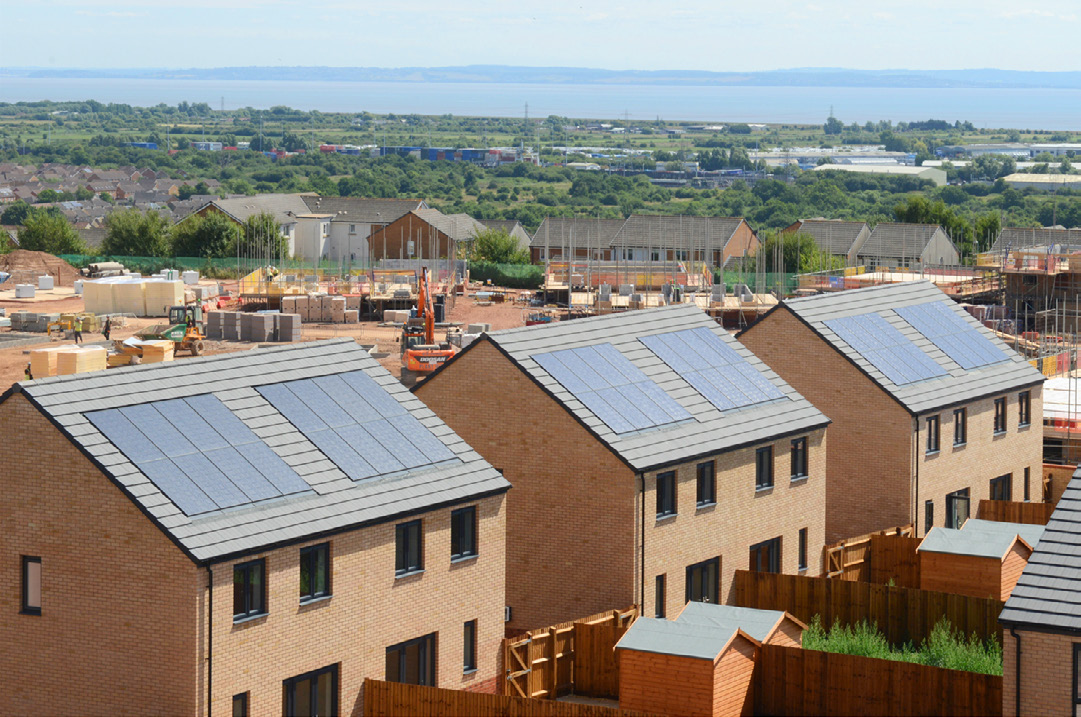
Grant will still drive scale and pace, but it needs recalibrating on what we have learnt since the launch of ORP, not least on costs. Welsh Government’s own evaluation, published in March, reports average ORP costs of £10,300 per home for the solar panel and battery package, and £15,400 for the external wall insulation package.7 I’d build the most common package differently: solar panels and a battery, a heat pump, ventilation, loft insulation, cavity wall insulation where appropriate, and the uplift to high performance doors and windows when they fall due for replacement anyway. External and internal wall insulation are kept for the special cases, with careful design (especially for the latter). Published prices for the rest are a median of £13,000 for an air source heat pump under the Boiler Upgrade Scheme,21 under £1,000 for a loft,22 and, on my own rough figures, around £1,500 for a cavity and £2,000 each for ventilation and for the glazing uplift. That adds up to about £30k at retail prices, and nearer £25k at the volume rates Social Landlords can command. High temperature heat pumps, which keep most of the radiators and pipework, promise to cut both the disruption and the cost of installation significantly, potentially halving today’s Boiler Upgrade Scheme figure and bringing the whole home package in closer to £20k. James, my co-founder at Sero, swore 5 years ago that we’d get there. The evidence is finally catching up with his instinct. That is a marked reduction from figures cited elsewhere, which usually hark back to ORP’s launch or even before it. The same evaluation measured what the packages saved Residents: about £430 a year for solar panels alone, £650 with a battery, and £81 for the wall insulation.7 A saving of £650 a year, partly kept by whoever funds the panels and battery, helps repay some of these works, which is the sort of arithmetic a social tariff could make bankable.
The balance of measures matters too. Batteries, heat pumps and solar panels are all “tangible” assets in the financial world, and can have lending secured on them. The evaluation is blunt about why lending doesn’t work for retrofit today: rents don’t rise after the works, so there is no return to borrow against.7 A social tariff, and a landlord obligation to meet the fuel poverty outcome, would create one. It also sidesteps the rule that has stopped landlords doing this themselves: Ofgem’s maximum resale price bars a landlord reselling energy to Residents for more than it paid, and the right to choose a supplier sits with whoever pays the bill.23 That rule is now under review for the first time since 2001.24 If the tariff is the national energy company’s, Residents are its customers, the landlord pays the balance, and neither the ‘Rent and Service Charge Standard’ nor the benefits system need get involved. What’s left to settle is Ofgem allowing a tariff for a defined group, and who carries the price risk.
Even at reduced, and reducing, costs, £100m a year of grant takes around 60 years to decarbonise the existing Welsh social homes, which is too slow, and slower still spread across every tenure. Homes are 8% of Wales’s greenhouse gas emissions.3 So is the answer perhaps not just grant, but long term secured lending against measured outcomes, where Welsh Government, its energy company and its pension partnership (£25bn of assets, per the manifesto)15 balance the savings from better homes over the long term against the capital cost of pragmatic delivery now? ORP started with big ambitions and got diluted along the way. The money to replace it is modest, but I’m not sure the ambition has to be.
About the author
Andy Sutton helped develop the Innovative Housing Programme and the Optimised Retrofit Programme whilst at the Building Research Establishment (BRE). He offers strategic advice and analysis on housing through his business …as architecture. A chartered architect, he is a past president of the Royal Society of Architects in Wales, a strategic advisor to Constructing Excellence in Wales, and sits on the Chartered Institute of Housing Cymru advisory board. He co-founded Sero and the zero carbon developer Sero Homes. He also helps hedgehogs.
Notes and sources
1. Welsh Government, Written Statement: Optimised Retrofit Programme 2020-21, 6 November 2020.
2. UK Government, Clean Power 2030 Action Plan, 13 December 2024.
3. Welsh Government, First 100 Days: Warmer and more energy efficient homes (delivery report), 2026.
4. Welsh Government, Welsh Housing Quality Standard as at 31 March 2025 (245,310 social homes in scope).
6. Welsh Government, Optimised Retrofit Programme 3, Year 5 guidance 2026 to 2027.
9. Welsh Government press release, £17m Welsh Government boost for home energy upgrades, 20 July 2026.
12. New Economics Foundation, Financing Wales' Housing Decarbonisation, July 2021.
13. Housing Today, Welsh Government announces £17m for housing retrofit schemes, 21 July 2026.
14. Welsh Government, Our ambition for Wales won't be dimmed by financial challenges, 1 September 2026.
15. Plaid Cymru, For Wales: 2026 Manifesto, pp.12 and 53 to 56.
16. Welsh Government, Fuel poverty modelled estimates for Wales: October 2024, published 7 August 2025.
19. Welsh Government, Welsh Housing Quality Standard 2023, pp.36 and 71 to 72.
20. Welsh Government, Welsh Housing Quality Standard 2023: Immediate Changes, January 2026.
22. Energy Saving Trust, Roof and loft insulation guide.
23. Ofgem, Tenants' energy rights explained.
24. Ofgem, Reselling gas and electricity: Maximum Resale Price direction, call for input, October 2025.