Andy Burnham’s high-profile housing pitch echoes a playbook long familiar in Wales, writes Cathy Owens. But being ahead on principle is not the same as winning on delivery

In the run-up to Andy Burnham walking into Downing Street, we learned more about the political priorities he would put into practice. The topics he discussed reflected a political tradition Labour MPs felt instinctively would get a better hearing across the UK: more community-focused, valuing public services and local government, and more concerned with how growth is shared across the country. People should be able to build good lives where they live — good jobs, closer to home, valuing the foundational economy of places and regional economic growth.
And housing. Seen as fundamental to help build prosperous and resilient communities, with a healthy dose of social delivery and state funding.
In many respects, it is a political tradition very familiar to Wales, and to Welsh Labour in particular. It is a message that has echoed through Welsh Labour for a century and has then been turned into policy by successive Welsh Governments. It is what maintained Welsh Labour’s power at the Senedd for the first 26 years of devolution. And on paper, a commitment that the new Plaid Cymru Government has promised to build on.
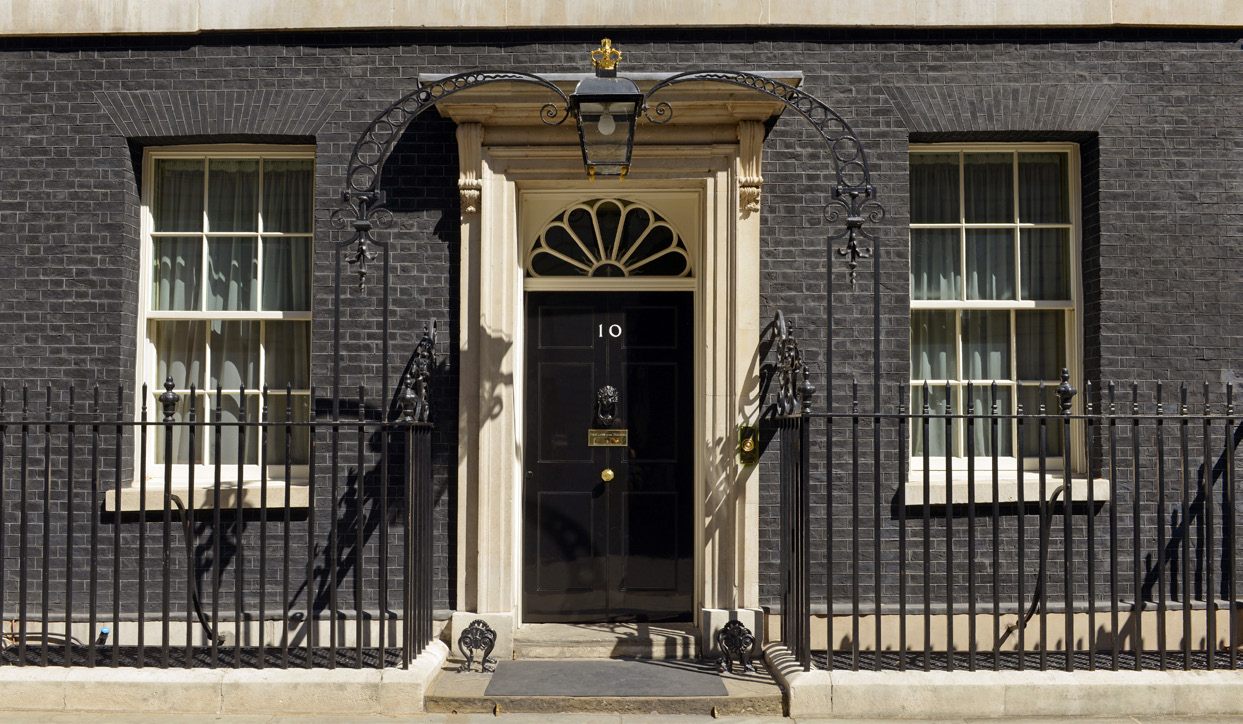
Andy Burnham’s communication skills and reach meant that what he said about Housing First to tackle homelessness, followed by a new mission to grow social and council housebuilding, were breathlessly repeated across the political news and policy spheres.
My case is that much of what Andy Burnham is saying and doing, Wales has already done to a large degree. That homelessness is a system failure and that the state should build directly, at scale, and hold on to what it builds have been the working assumptions of Welsh housing policy for more than a decade.
In many areas, Wales has already legislated to tackle homelessness and retain and build social homes. But it often comes down to finance over principle, and Wales is spending more than twice as much per head on new social homes as England.
Legislative lead
The Housing Act 2014 introduced statutory homelessness prevention duties three years before England’s Homelessness Reduction Act. The Renting Homes Act 2016, implemented in December 2022, swept away the old tenancy landscape in favour of occupation contracts, written statements and fitness for human habitation. The Abolition of the Right to Buy Act 2018 did exactly what its title promises: since January 2019, every social home built or bought in Wales stays in the social stock permanently.
Then, on 1 April this year, the far-reaching Homelessness and Social Housing Allocation Act 2026 came into force. It abolishes the priority need test and the intentionality test and extends the definition of being threatened with homelessness, gives every applicant a written Prevention, Support and Accommodation Plan, and places an “ask and act” duty on health boards, prisons, probation and social services. It secures accommodation for care leavers for three years after their 18th birthday. And it lets a household challenge the suitability of the accommodation while living in it.
So, Wales is mostly ahead of the game on legislation compared with England, though plans to tackle no-fault evictions are not yet in place. We can expect the new Welsh Government to legislate on fair rents, affordability and no-fault evictions to protect private renters in the second half of the Senedd term.
Spending gap
When you look at the big spending announcements heralded by the new PM on social housing, it is actually underwhelming compared with Wales. England’s Social and Affordable Homes Programme is around £4bn over 10 years from 2026-27 for 300,000 social and affordable homes, and probably only 60% of those will be social homes. The overall figure includes shared ownership, affordable rent and intermediate rent – and one private housebuilder alone took £350m.
Wales’s Social Housing Grant for 2026-27 was set at £446m in the final budget in January and raised to £466m in the new government’s first supplementary budget in June. That is 11% of the package in England, while a population ratio would put it at 5%.
Alongside it sits £224m for homelessness support and prevention, £110m for dowry gap funding and major repairs, and £97m for decarbonisation. One could extrapolate that to £68 per person in England, and £147 per person in Wales. Out of a total Welsh capital allocation of £3.6bn, the Social Housing Grant is now close to one pound in every eight of Welsh capital spending.
The targets point the same way. England’s 300,000 over 10 years is 30,000 social and affordable homes a year. Wales’s was 20,000 social homes over five years, and now 20,000 over four – three times the rate. Narrow England’s figure to social rent alone, 18,000 a year, and the gap widens again.
I think that is worth shouting about. And it did not happen by accident.
It is something Mark Drakeford and Julie James can be proud of. It is not just that Welsh Labour have been squarely in the centre-left for the last 25 years; it is that difficult decisions were made to put housing at the heart of the agenda over the last 10 years in particular. Difficult decisions were made to just about meet the 20,000-home target.
But even so, is it enough? We still have more than 10,500 people in temporary accommodation in Wales, down by only 3% in the last year, despite record investment. CIH Cymru reports that 90,000 households (170,000 people, including 34,000 children) are waiting for a social home. One in every hundred Welsh households became homeless in 2024-25. The temporary accommodation bill has gone from £41m in 2020-21 to more than £99m.
Private sector pressures
And it is not exactly rosy in the private sector. Housebuilders have limited their investments in Wales and cite significant additional cost and planning barriers. HBF data shows just 4,800 homes were granted planning permission in Wales in the year to March 2026, down 29 per cent. The Welsh Government’s own estimate of need is around 5,700 market homes and 3,000 affordable homes a year, and private developers deliver roughly a third of all new affordable housing in Wales through section 106 agreements.
And any reading of Plaid Cymru’s oppositionist signalling in recent years does not bode well for new housebuilding or for easier consenting.
Regional planning
Are we going to see a change in the delivery mechanism, similar to shifts in England around Metro Mayors? Again, Wales stands up well on localism. As with Manchesterism, Welsh Labour has developed a uniquely strong relationship with local authorities – protecting local services from the very worst of austerity, while empowering them to spend the money without ringfencing.
Wales has taken a significant step towards regional strategic planning by establishing four regional Corporate Joint Committees (CJCs). They produce Strategic Development Plans (SDPs), which sit in a middle tier of the planning hierarchy. The intention is to address housing need at a scale that reflects genuine travel-to-work patterns and functional economic areas, rather than drawing artificial lines at local authority boundaries. The previous Welsh Government was attempting to ensure that authorities could not simply opt out of difficult decisions about where to build homes.
In practice, however, progress on SDPs has been slow, and questions remain about whether CJCs have the capacity, political will and resources to deliver plans that genuinely shift the dial on housing supply, particularly given the scale of unmet need evident in homelessness and temporary accommodation figures.
And on direct delivery mechanisms, the picture is less clear. In England, the £39bn arrives with 10-year funding certainty for 33 strategic partners, and for the first time, council landlords are among them, holding Homes England strategic partner status. Wales has already seen a boost in council building, with Cardiff leading the way.
The Plaid Cymru commitment to establish Unnos could boost further building, but whether it turns out to be a genuine developer with borrowing powers and compulsory purchase teeth, or a coordinating body with an excellent logo, is not yet clear.
So, what can Wales take from the Burnham Blueprint? Ten-year certainty of spend rather than annual allocations, even greater strategic partnerships with councils, and possibly targets on all tenures to build more affordable housing. But Labour in England could lean much further into the Welsh Labour playbook on housing.
Right to buy could be the first change. A meaningful share of England’s £39bn will go on refilling a bath that still has the plug out.
And the Welsh Government is seeking to unfreeze the local housing allowance, often described as the primary driver of homelessness, pressing a new Prime Minister who spent years making the same argument from Greater Manchester.
The Burnham blueprint is therefore less a revolution than a reminder that Wales has already made many of the right choices: tackling homelessness, protecting social housing and investing on a greater scale. But being ahead on principle is not the same as winning on delivery. The new Welsh Government must match the confidence of its policy framework with faster planning, long-term funding and many more homes across all tenures. Wales helped draw the map. The challenge now is to reach the destination.
Cathy Owens is a former special adviser to Rhodri Morgan and is now a director of the Cavendish Cymru lobbying firm.