The South Wales Metro presents a fantastic opportunity to switch to transit-oriented development, says Mark Barry.
With all my work and advocacy in respect of the South Wales Metro since 2011, I have become far more aware of some of the challenges we face in providing sufficient numbers of sustainable and affordable homes in the Cardiff Capital Region.
In briefly setting out these challenges and what I think we need to do, let me start with some home truths:
- We have a shortfall in the number and variety of affordable homes needed – this is an international issue (This recent report by Shelter England is a good read)
- House prices and supply thereof are not determined by demand for housing – in fact higher house prices are much more correlated with low cost and available finance, which does nothing for increasing the supply of affordable homes
- The private sector will never build enough affordable homes – nor should we expect it to. Private Sector build out rates are determined by the need to achieve targeted returns on investment as found in the 2018 Letwin Report. He found…
‘….that the homogeneity of the types and tenures of the homes on offer…. and the limits on the rate at which the market will absorb such homogenous products, are the fundamental drivers of the slow rate of build out’.
- Climate change and our need to decarbonise requires more homes in places one can get to/from without a car
- Town centres and high streets have been hollowed out over the last 30 years, one of the biggest causes has been car-based out of town corporate shed retail
- This is not a planning system issue!
So, what do we do….
The public sector has to step in and build the sustainable affordable homes we need, aligned with a more place-based regeneration of our existing communities with a strong focus on transit-oriented development.
The problem
 Paraphrasing the late Eric Morecombe, our planning and development eco-system has resulted in us building ‘all the wrong stuff in all the wrong places’ for over 50 years. Homes, hospitals, shops, offices, cinemas, leisure centres, etc all designed and located around car access.
This car-based eco-system was in part enabled by the likes of such planning and transport giants as Corbusier, Moses, Buchanan and Beeching, and now means that many new houses are located in places that require you to get in your car for nearly everything we need to do!
So, for me, after the collapse of local and employment intensive heavy industry, the biggest negative influence on many of our city and town high streets in south Wales, has been the huge relocation of office, retail, public services, etc to car based ‘out of town’ locations in the last 50 years. South east Wales is covered in them: Cardiff Gate, Trago Mills, Imperial Park, Spytty Park, Navigation Park, Royal Glamorgan Hospital, Celtic Springs, McArthur Glen, Culverhouse Cross, Llanfrechfa Grange, etc.
This is not, or should not be, ‘rocket science’, as stated in Regenerating Town Centres in Wales…
‘The growth of car based, out-of-town retail has contributed greatly to the decline of town centres.’
When you combine this reality with the private sector focus on car-based housing development and the consequential lack of affordable homes, then we clearly have a problem.
To be clear I have no problem with private house building. Although I use this counter when I am often told about the environmental credential of new developments.
‘You can’t claim the new houses you have built are sustainable and low carbon if you have to get in your car every time you want to buy a bag of sugar.’
Our problem is more to do with where we build and less so what and how we build, and more especially with the reality that if we want more affordable homes the public sector has to take the lead on building them.
The Metro can be a catalyst for change
The impending South Wales Metro provides an opportunity and must be a catalyst for change.
After 15 years of work and over £1 billion of capital investment, this transformational Welsh Government programme is nearly complete. By the end of 2027 service frequency on Core Valley Lines (CVL) north of Cardiff will double. By then four tram-trains an hour (tph) will operate from Merthyr, Treherbert and Aberdare, with 12 tph through Pontypridd to/from Cardiff. Journey times will be reduced and capacity double.
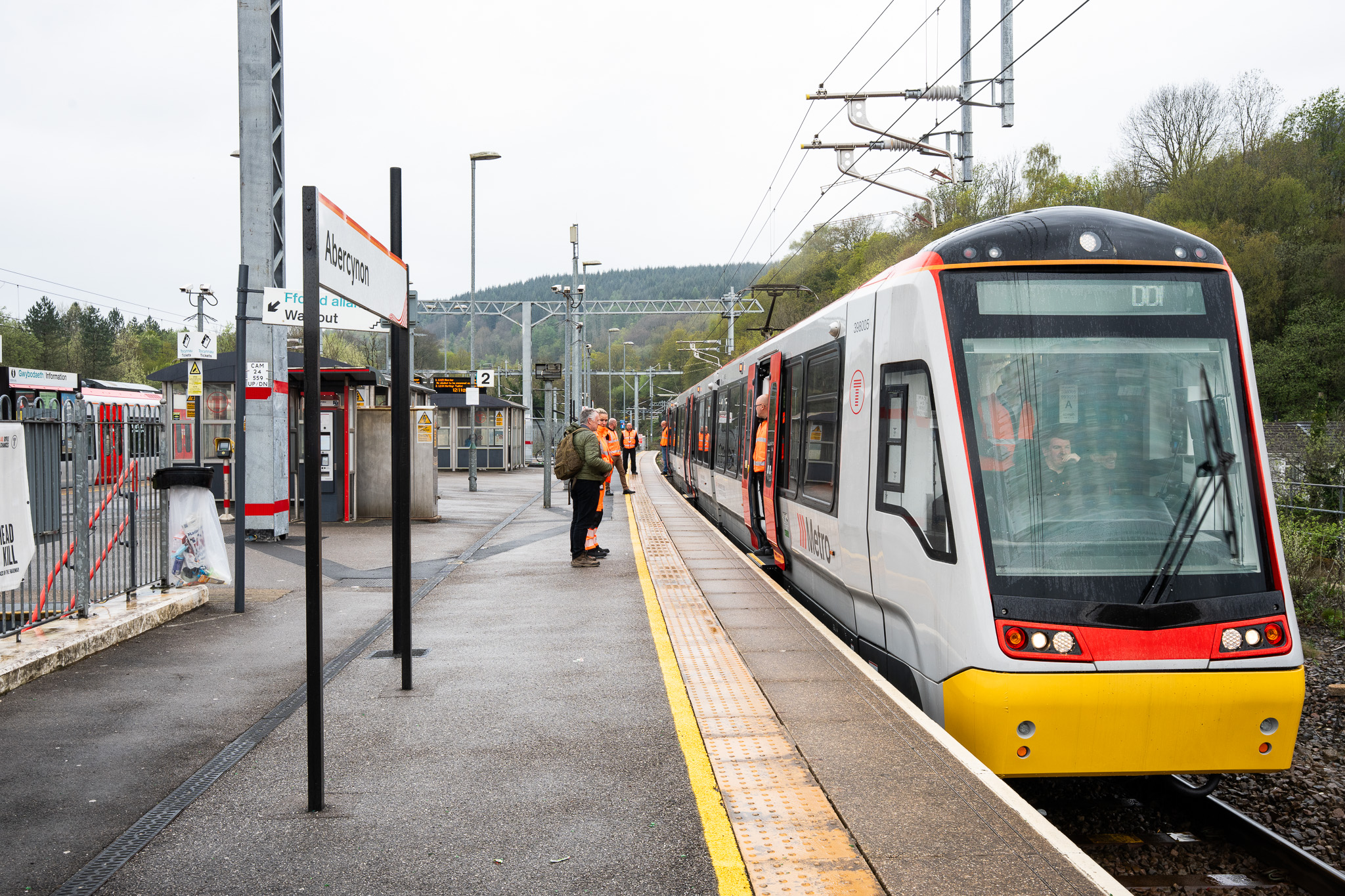
This change demands we respond in many other areas to maximise the wider benefits and impact of the Metro anticipated in the early reports on the project – especially the 2013 Metro Impact Study. So, town centre regeneration, economic development and especially housing.
Using the connectivity dividend it offers, we can and should encourage a public sector led programme of house building as part of a more holistic regeneration programme focussed on town centres
The solution – Transit Oriented Development (TOD)
The Climate Emergency and mode shift targets demand that we completely re-think our approach to land-use and in so doing embrace, so-called, transit-oriented development (TOD) and placemaking to augment the development and implementation of the South Wales Metro.
Whilst there are many definitions of TOD I tend to focus on the following key features, which I think we in Wales need to embrace:
- Mixed use and higher density development around transport corridors and stations
- Aligning new housing, public services and employment sites with public transport – some real transport/land use planning
- Improving safety and quality of urban realm – especially our urban streets
- Integration with active travel
- Inclusion of open/green spaces
- Community engagement and involvement in scheme development and implementation.
It’s an approach to development focussed on people, public spaces and public transport, leading to reduced car dependency; and is an approach that delivers benefits, for example:
- With higher density it becomes easier and less costly to provide public services
- Local shops and retail have a higher local demand that can be accessed via active travel
- In many cases schemes for new housing can be linked to local and town centre regeneration projects and greening urban realm improvements
- TOD also means public transport investment becomes easier to justify because higher numbers of people can more easily access transit services (helping build the fare box and reduce the operational subsidies of new transit – bus or rail).
Collectively, and more importantly TOD reduces our need to use and own cars – given the present danger of climate change this perhaps is the primary reason for us in Wales to embrace TOD. PS I have no time and little patience for the manufactured ignorance associated with the ‘anti-net zero’ brigade.
How?
The big question for me, is, does the Cardiff Capital Region have the capacity and capability to really take on this challenge? Does the region need a Metro Development Corporation (or proxy thereof) to complement Transport for Wales (TfW) as it rolls out our Metro?
Looking back, perhaps we did throw out the baby out with the bathwater re the winding up of the Welsh Development Agency in 2004 (and included the Land Authority for Wales which was absorbed into the WDA in 1998). Whilst I was and remain critical of some of its activities toward the end of its life, the WDA did possess a very effective land use, regeneration and development capacity that would be ideally placed to take up this Metro TOD challenge.
So, I think we do need a body with an operational and delivery focus to embrace the opportunity for the Cardiff Capital Region, especially with the development of the South Wales Metro, for transit-oriented development. I think a focus on densified, transit connected, affordable (and likely public) housing should be at its core. We need some bold targets and action in this space and clear political leadership.
In practical terms any new organisation will have to work with the private sector to help bring forward both
- i) a small number of larger brownfield sites (for example Treforest Industrial estate or the reuse of some out-of-town office and retail for housing) and
- ii) the many more smaller in-fill developments vs the fewer larger greenfield sites more often favoured by developers.
I think this new eco-system will need a long overdue reduction in the number of registered social landlords (RSLs) in Wales. I think there are still over 30; I would argue we need far fewer, with a regional focus, with perhaps three or four in South East Wales given the larger population. This is a challenge, but we must face it. We need fewer bigger RSLs with the scale, capacity and capability to build the homes we need. This needs to be aligned with new and more innovative funding models (for example, like that used at the Mill site below) to reduce dependency on public sector grant funding.
As stated, this new TOD ecosystem must take on the constraints and challenges of developing many smaller infill sites all around the Metro network. There are also still bigger TOD-based urban opportunities that demand major interventions. This is especially true in Cardiff where the Vastint proposal along the Embankment/Dumballs Rd offers the prospect of a more European style street layout and density, punctuated with public spaces. I also think the Treforest Industrial estate is crying out for a major mixed used and density based overhaul (aligned with a new station at Nantgarw).
In pursuing this agenda, we have to acknowledge that in most cases, we don’t need skyscrapers in the same way we don’t need low density car-based sprawl. Many practitioners are advocating, high quality mixed use, ‘gentle density’. This sees city and townscapes expand at four to eight stories built around streets, public transport and AT connectivity, etc.
It’s also worth noting one of the better recent examples of TOD in Wales, The Mill on the old papermill site in Cardiff. With a masterplan and financing model developed and curated by Tirion Homes, it included density, streets, mixed use and mixed tenures and multiple development partners. The only thing lacking is the Metro station at Ely Mill/Victoria Park that the development was predicated on!!!
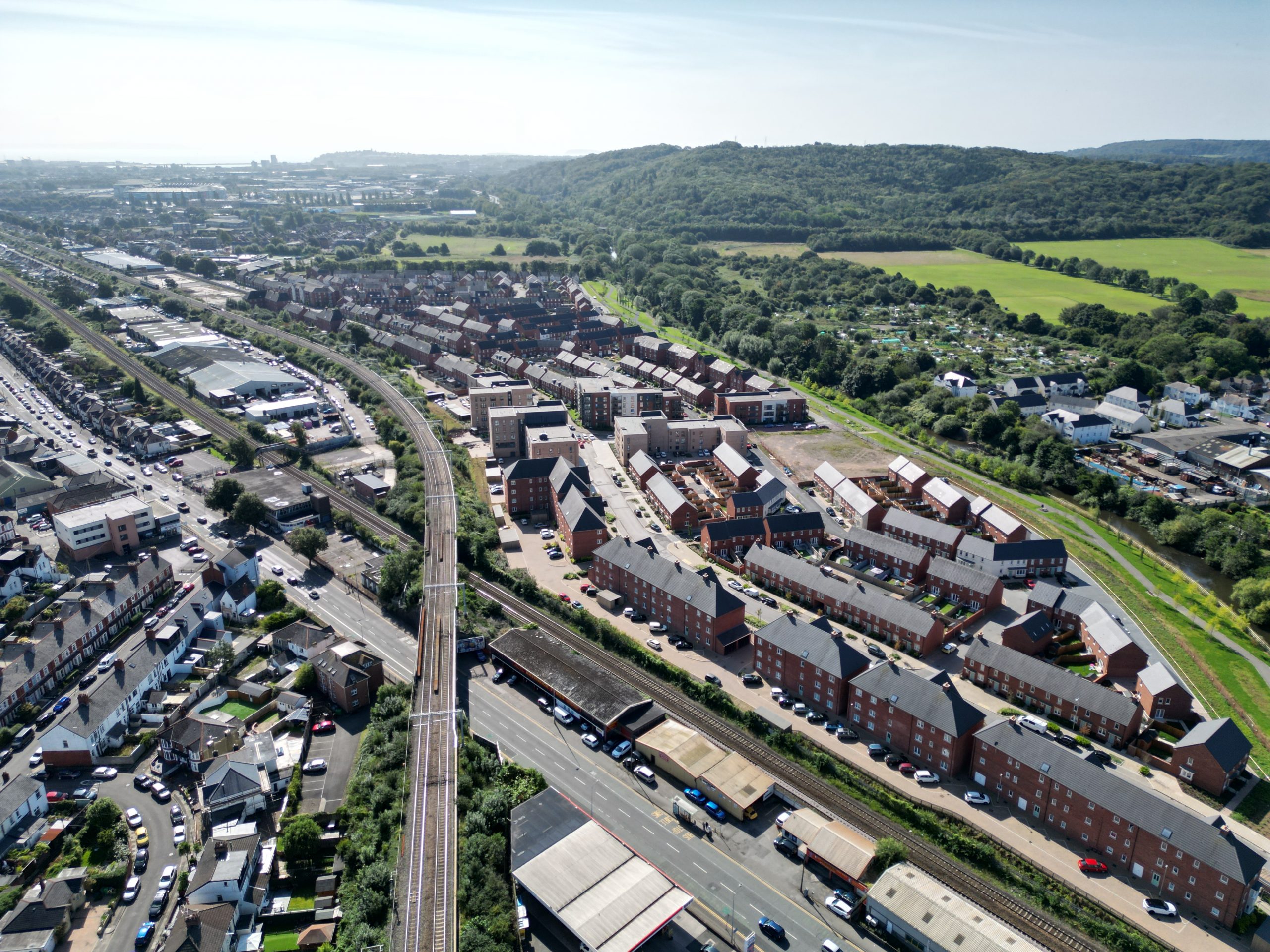
The Mill in Cardiff is one of the better examples of transit-oriented development in Wales but still lacks a station
To conclude….
The move toward more widespread TOD, with a development corporation like focus on affordable homes, is a must and necessary to complement our investment in the Cardiff Capital Region Metro.
To find out more about the development of the South Wales Metro over the last 15 years (and TOD), you can read How to build a Metro. Please consider registering for the Metro and Us event on June 4 which will explore TOD issues and opportunities in more depth
Mark Barry is professor of practice in connectivity at Cardiff University’s School of Geography and Planning and also has his own consulting business M&G Barry Consulting. He led South Wales Metro Development for Welsh Government from December 2013 to January 2016 following the publication of his Metro Impact Study in 2013.