What should the housing priorities be for the next Welsh Government? Bob Smith presents some ideas.
Introduction
 Five years ago, my colleague Pete Mackie and I set out our housing priorities for the Welsh Government 2021-26 in a paper published by the UK Collaborative Centre for Housing Evidence (CaCHE). Following the 2021 election Welsh Labour set out its own priorities, updated following the co-operation agreement (2021-2024) with Plaid Cymru.
It would be churlish not to acknowledge that progress has been made over the current term, not least in the provision of additional social rented homes, in reforming the law on homelessness, in tackling the issue of second homes in parts of Wales and in continuing the improvement of parts of the existing housing stock. However, Wales remains in the grip of a housing crisis (what some have termed an emergency) and tackling this is a complex and long-term challenge. It requires a whole system approach to housing and an understanding of the evidence (and its limitations) which should inform developments in policy and practice.
The current Senedd term is drawing to a close and ahead is the May 2026 election and the next Welsh Government. This will see an enlarged Senedd (up from 60 to 96 members), elected on a more proportionate voting system and possibly a change in the political colour of the Welsh Government. It is therefore an appropriate time to reflect on what might be the housing priorities for the next administration. This article draws on conversations held with organisations represented on the CaCHE Wales Hub. A more detailed evidence-informed paper will be published by CaCHE shortly.
Priorities for the Next Welsh Government 2026-2030
- Developing a comprehensive and shared strategic vision for housing in Wales
- Increasing housing supply (with an emphasis on social and affordable housing)
- Tackling homelessness
- Addressing issues of land, planning and construction in relation to housing
- Improving the existing housing stock and tackling fuel poverty
- Delivering high quality and responsive services to tenants
- Enhancing the housing evidence base to inform policy and practice
- Developing the housing workforce
Developing a strategic vision for housing in Wales
The Future Generations Commissioner for Wales has argued that housing is fundamental to well-being in Wales and there is a need for a long-term approach to housing. However, the Future Generations Report 2025 makes very few references to housing and where it does these are mainly in terms of housing’s roles in tackling other issues, for example, reversing nature loss, reducing carbon emissions and preventing ill health. Surely tackling the current and future needs of the people of Wales deserves more attention?
In recent years there has been a revival of interest in the idea of national housing strategies. Given the complex nature of housing and the significant costs of its production, it seems obvious that housing strategies need to adopt long-term horizons, scanning several electoral cycles. Strategies are not just policy documents; they are tools for leadership and governance to achieve agreed change and objectives over a longer period. An effective national housing strategy requires a comprehensive understanding of the challenges to be addressed, as well as a vision of a desired end state.
Prior to devolution significant work was done, both by Government and a range of stakeholders, to create a framework for an initial national housing strategy, Better Homes for the People of Wales. Arrangements were put in place to monitor, evaluate and update this strategy. A second (much less ambitious) national housing strategy was published in 2010. The current Welsh Government, in its 2024 White Paper on Adequate Housing, Fair Rents and Affordability indicated its intention to develop a national housing and regeneration strategy, which is to be welcomed. This is in the very early stages of development but will need to be progressed by the next Welsh Government in a systematic and collaborative fashion.
Increasing housing supply
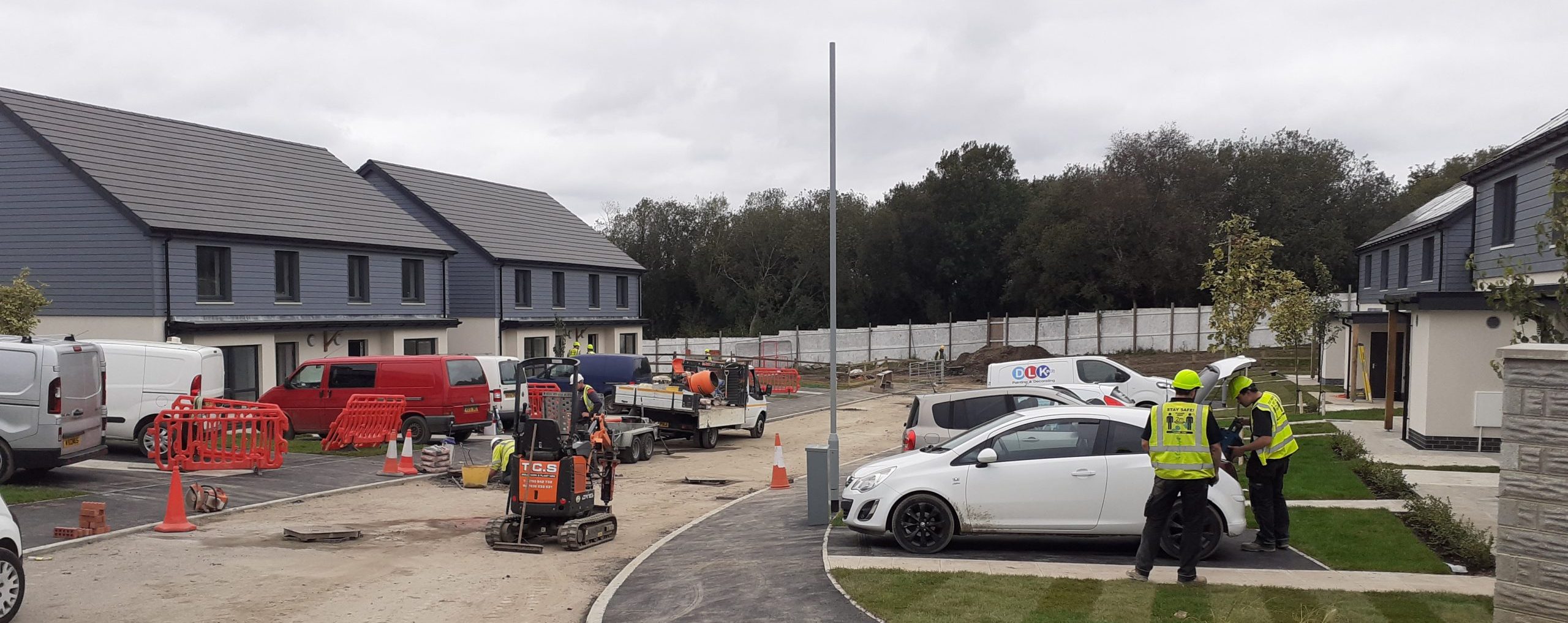
Building 20,000 new low carbon social homes for rent between 2021and 2026 was a challenging target. The target over the previous five-year term had been for 20,000 additional affordable homes, which included delivery under the Help to Buy programme. The policy emphasis has shifted towards social homes for rent, but committing to a target of building 20,000 new social homes is not the same as delivering them. The period has witnessed a series of economic challenges, particularly post covid, including rising building and labour costs and higher rates of inflation, making achieving the target more challenging.
Welsh Government has improved its collection and publication of data on affordable and social housing provision. The most recent evidence shows there have been year-on-year increases in the number of additional homes provided, but it’s acknowledged the target is unlikely to be met, although suggested that it will be achieved by the end of 2026. However, the latest figures have included a reworking of the data to allow for the inclusion of long-term vacant social housing brought back into use through the Transitional Accommodation Capital Programme (TACP). The 2025 Affordable Housing Taskforce Report argued that such properties should be included in the additional provision, although it seems rather a stretch to count these as ‘building’ additional social homes and appears to conflate the provision of new and existing social housing to get closer to the overall five-year target.
There is a strong case for the next Welsh Government to continue to set challenging but realistic targets for the provision of additional high quality affordable homes, with an emphasis on the delivery of more social rented homes. However, progress against targets should be clearly monitored and reported on a regular basis and whatever targets are set should be clearly defined at the outset, transparent and consistently measured.
Ending homelessness in Wales
Significant progress has been made in respect of legislative and policy change to tackle homelessness in Wales. As the 2025 Crisis Homelessness Monitor for Wales has made clear, the focus in Wales has been on strengthening prevention, rapid rehousing and removing barriers to the provision of appropriate housing and support. Whilst positive changes have been made, obstacles remain, not least in terms of insufficient suitable and affordable housing, a lack of workforce capacity, in some parts of Wales failures to provide appropriate responses to the needs of the homeless and ongoing weaknesses in the evidence base.
The Homelessness & Social Housing Allocation (Wales) Bill is progressing through the Senedd, supporting the intention of the Welsh Government to make homelessness ‘rare, brief and unrepeated’. The legislation will end the priority need and intentional homelessness tests and place an increased emphasis on early prevention. It also seeks to place a new duty on housing associations not to unnecessarily deny a request to rehouse a homeless applicant. However, the legislative changes (whilst very welcome) are not a panacea. Continued investment in social housing supply will be needed as well as additional resources for housing support and local government homelessness services over the next Senedd term.
Addressing issues of land and planning
The planning system seeks to balance a series of often competing demands , as well as meeting current and future needs, not least in relation to addressing housing needs, across different tenures and localities. A well-resourced planning system, which encourages citizen participation, is critical in the design of new homes, well connected and safe neighbourhoods and successful and diverse communities.
The Welsh planning system is ‘plan led’, with three tiers of plans: The National Development Framework, four Regional Strategic Development Plans and 25 Local Development Plans. Once again, at the time of writing, consolidating planning legislation is going through the Senedd. However, the key to overcoming many of the planning barriers identified in the Affordable Housing Taskforce Report 2025 is to ensure that the planning system is fully resourced (particularly at local level) and that timely planning decisions can be made on the basis of up-to-date adopted local plans.
Improving the existing housing stock
Almost a third of homes in Wales are more than 100 years old and, although there has been progress in improving parts of the existing stock, not least in the social housing sector through the implementation of the Welsh Housing Quality Standard (WHQS) WHQS 2023, there remains much to be done. Improving the quality of Welsh homes across all tenures, and in particular decarbonising more existing homes, will help to meet the wider objective of reaching net zero, as well as improving the energy performance of the stock and helping to tackle fuel poverty. Investing in housing improvements also has the potential to contribute to skills development in construction, the development of local supply chains and economic growth.
It will be important for the next Welsh Government to strike an appropriate balance between encouraging investment in the existing housing stock and investing in growing the supply of additional social and affordable homes. Social landlords will need a degree of funding certainty to continue their progress in decarbonising their stock and meeting WHQS 2023. The scale of the challenge in the private sector is even greater and consideration will need to be given as to how home owners and private landlords might be encouraged to improve and decarbonise their homes.
Delivering high-quality and responsive services to tenants
In some of the issues identified above the vital role of social housing has been highlighted. The wider benefits of investing in social housing have long been recognised, in terms of improving health and education outcomes and boosting jobs and the economy, as well as providing secure and relatively affordable homes. Although the scale of the social sector in Wales has been increasing in recent years, it remains far below what it was half a century ago. In some quarters it has also been criticised, reinforcing negative attitudes towards the sector.
In terms of the regulation of housing services to tenants, significant progress has been made in Wales over the last 10-15 years, through the work of housing regulation in Welsh Government, Audit Wales, the Public Services Ombudsman for Wales and (in relation to the private rented sector) Rent Smart Wales. However, questions remain over the adequacy of resources available to ensure the quality and accountability of housing services, as well as their consistency. There is surely a case for not only strengthening the regulation of services to tenants, but in the social sector developing a more consistent approach across the social housing domain.
The continued work of TPAS Cymru and the recent creation of a new National Independent Tenant Voice Cymru (NITVC) help to ensure that the views of tenants are represented at all levels of housing policy making in Wales, although more needs to be done to strengthen tenant engagement.
The Wales housing evidence base
Since devolution the question has been repeatedly asked: if Wales is to drive policies which respond to an ever more complex and rapidly changing housing landscape, how will these be ‘evidence driven’ in the absence of robust up-to date evidence? As Jennie Bibbings, senior researcher in housing and homelessness in Senedd Research, highlighted last year, the continuing problem is that, in comparison with other UK nations, Wales lacks data.
StatsWales provides regular updates on a range of housing statistics, plans and consultations. At the present time Welsh Government is consulting on proposed changes to statistical outputs, under a number of different themes, including housing. Welsh Government continues to commission, conduct and publish housing research reports on a range of issues, including (in 2025) policy evaluations of the second homes and affordability pilot in Dwyfor, the Welsh Government’s Innovative Housing Programme, the Empty Homes Grant Scheme, Rent Smart Wales and the Renting Homes (Wales) Act 2016.
Beyond Welsh Government and Senedd Cymru other organisations also contribute to the housing evidence base through their research, including national representative and campaigning bodies as well as those such as the Bevan Foundation. There are also occasional contributions from individuals in academia and consultancy. However, the overall picture remains of a sector where there is a lack of detailed understanding of processes at work in the system and of interactions within the sector which are undermining the development of effective policy responses.
Perhaps the most interesting recent development has been the approval by the housing secretary for a new Welsh Housing Survey 2027/28. This is a welcome development, but again not a ‘magic bullet’ in housing evidence terms. It will be important not only to see how this is shaped, complements other existing data and how plans might be developed to ensure this becomes a regular part of the Welsh housing data landscape.
The housing workforce
Those working in housing across Wales provide valuable services in delivering new homes, supporting regeneration and the improvement of the existing housing stock and in providing what are rightly expected to be high quality housing and support services to tenants and other service users.
The Welsh Government’s Homelessness Action Plan made the argument for building a resilient and valued workforce, recognised for their expertise. The Affordable Housing Taskforce noted that it regularly heard evidence of the importance of skills and the bottlenecks created by the shortages of them. These are reflected across the built environment professions, not only in relation to design, construction and the land use planning process but also in terms of those providing services to tenants.
As a profession, housing is rarely seen in a similar light to health, social work or education. However, housing practitioners are often dealing with a range of complex challenges, and it would be of enormous benefit if the next Welsh Government could work with the housing sector to help build the support needed for professional development in housing.
Concluding comment
May 7, 2026, will be an important date in the Welsh political calendar. However, what follows will be even more critical in continuing to address the many housing challenges faced in Wales. The next Welsh Government needs to put evidence-informed housing plans and policies at the centre of its programme.
Bob Smith is honorary senior research fellow at Cardiff University and knowledge exchange broker for Wales (part-time) at the UK Collaborative Centre for Housing Evidence (CaCHE)